

Tibetan Prayer Box: Gawu Meaning, Contents, and Necklace Guide
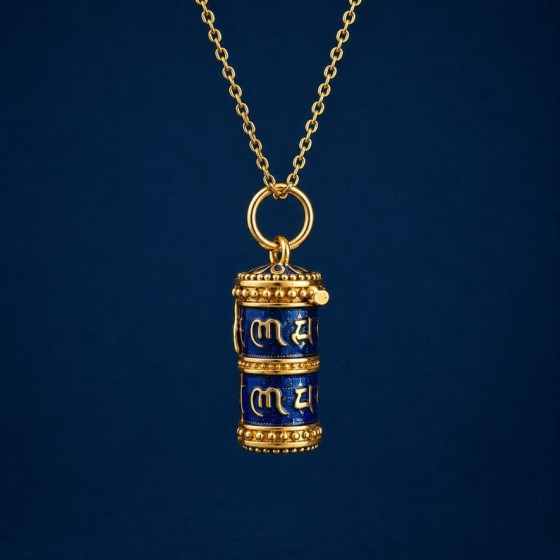
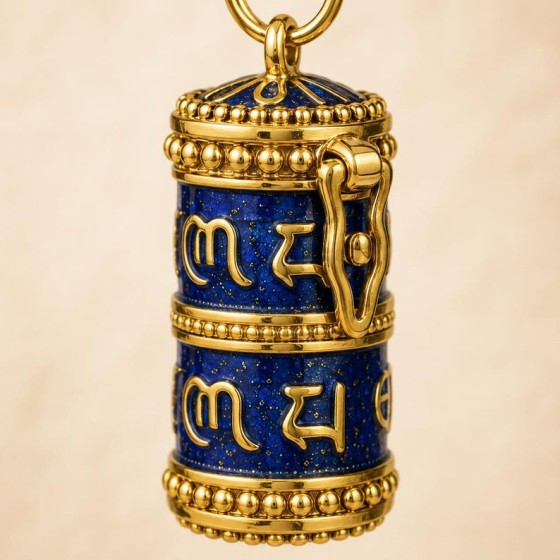
A Tibetan prayer box, commonly called a Gawu or gau box, is a small portable shrine associated with Tibetan Buddhist culture. Depending on its purpose, it may hold a mantra scroll, a small sacred image, blessed material, or nothing at all. A modern prayer box necklace may instead include a printed scroll, a personal note, or a decorative compartment.
Not every locket sold as a “Gawu” has been consecrated or prepared for religious use. The meaning depends on who made it, how it was prepared, and how the wearer uses it. Product descriptions should distinguish a traditional religious object from contemporary jewelry inspired by the form.
What Is a Tibetan Prayer Box (Gawu)?
A Gawu—also written as gau, ghau, or ga'u—is generally a small case worn on the body or carried during travel. These spellings usually refer to the same broad object type, although designs and religious use vary by region, maker, and tradition. Historical and antique Tibetan gau boxes may be made from silver, copper, brass, wood, or mixed materials. Their exterior decoration can include Buddhist figures, mantras, auspicious symbols, floral patterns, or protective motifs.
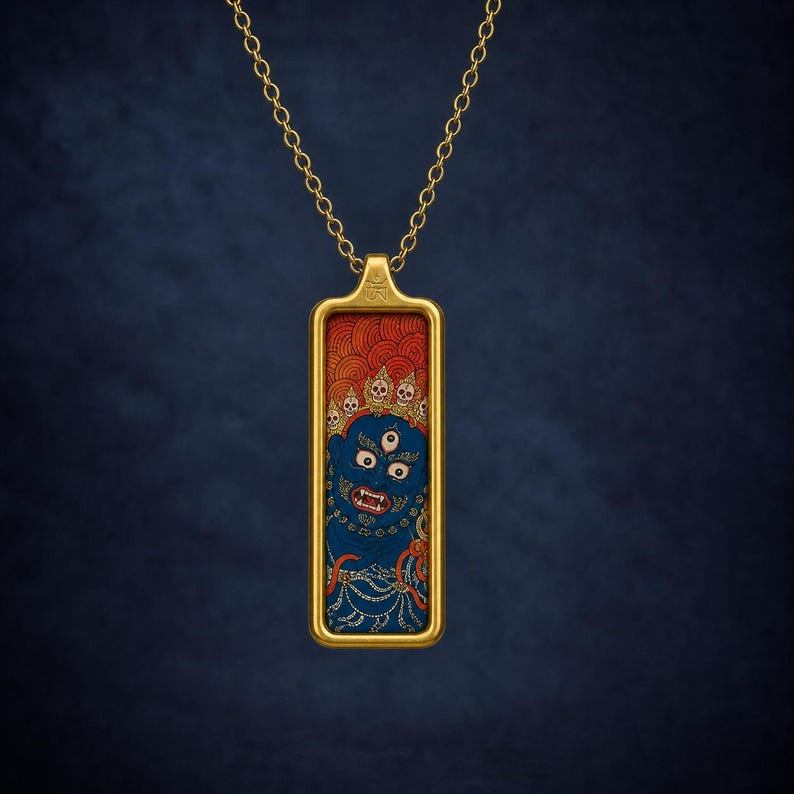
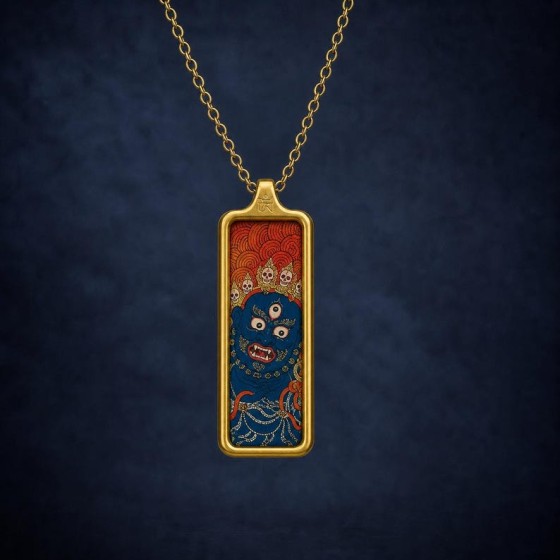
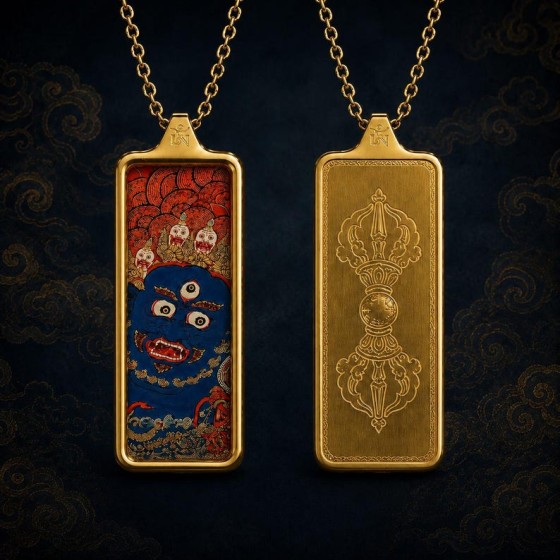
The KyLin Aura Mahakala Titanium Steel Dark Protector Necklace offers a useful comparison with an openable Gawu: it is a compact, solid rectangular pendant featuring Mahakala-inspired guardian imagery rather than a prayer box intended to hold separate contents.
The object can function as a compact support for remembrance and devotion. It should not be described as guaranteeing protection, luck, healing, or spiritual results. Traditional associations are best understood within the community or lineage that prepares and uses the object.
What Is Inside a Tibetan Gawu Box?
The contents vary widely. A museum object, a consecrated religious Gawu, a family keepsake, and a modern commercial necklace should not be assumed to contain the same things.
| Possible content | Context and meaning |
|---|---|
| Mantra or prayer scroll | A printed or handwritten text used as a reminder of practice, teaching, or intention. |
| Small sacred image | A miniature image of a Buddha, Bodhisattva, teacher, protector, or other religious subject. |
| Blessed substances | Materials prepared in a specific religious setting; their handling may follow lineage guidance. |
| Relic or consecrated material | Found only in some religious objects and not something to assume from appearance alone. |
| Personal keepsake | A modern note, photograph, affirmation, or tiny dry object chosen by the owner. |
| Empty compartment | Many contemporary lockets are sold empty so the wearer can decide whether to add anything. |
Prayer Box Necklace vs. Traditional Tibetan Gawu
A traditional Gawu may be prepared for devotional use and connected to a teacher, monastery, family, or particular practice. A modern prayer box necklace may borrow the box shape and symbolic design while functioning mainly as Tibetan-inspired Buddhist jewelry. Neither category can be identified with certainty from marketing language alone.
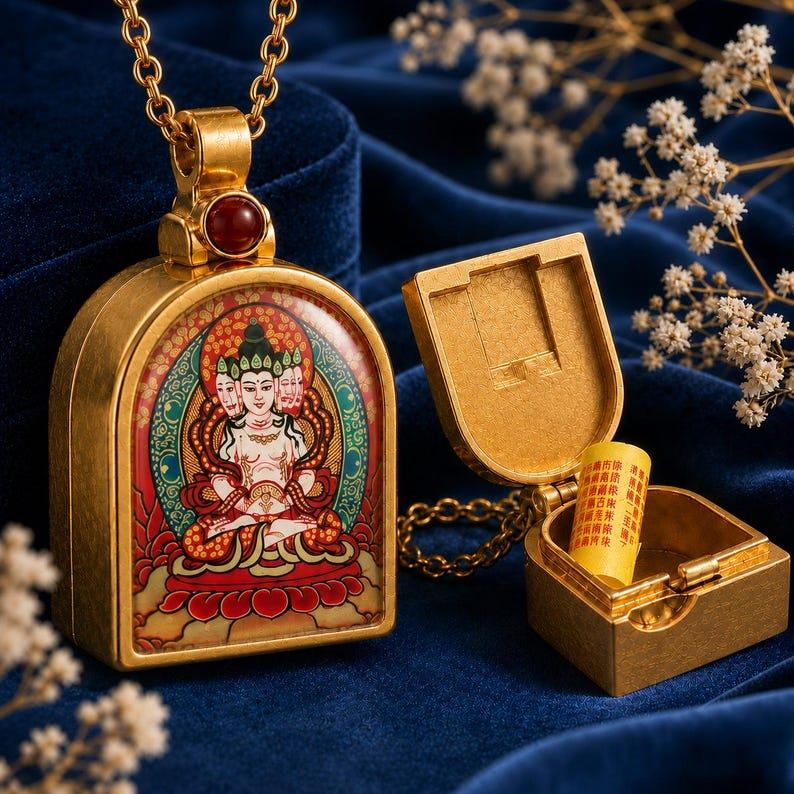
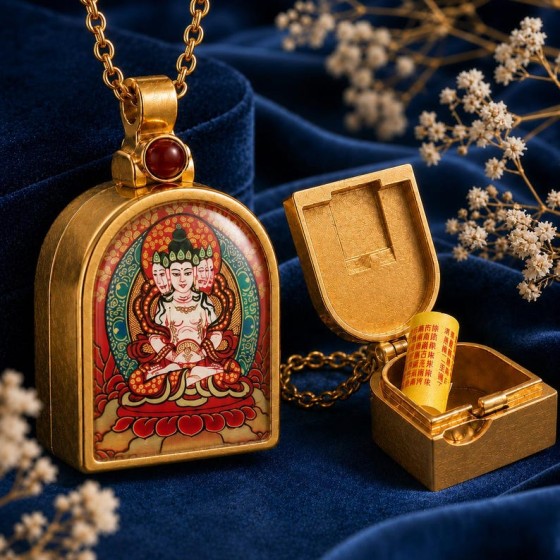
The KyLin Aura Meditation Tibetan Buddhist Prayer Box Necklace is a modern openable pendant with a small internal scroll detail. Its Vairocana-inspired image and compact prayer-box form are presented as symbolic reminders for meditation and clarity rather than guaranteed outcomes.
- Traditional devotional object: may be sealed, filled, blessed, inherited, or connected to a specific practice.
- Modern symbolic jewelry: may be openable, empty, decorative, or supplied with a printed scroll.
- Antique or collected object: may require specialist conservation and should not be opened casually.
Should You Open a Gawu Box?
Open it only when the object is designed to be opened and its instructions allow it. Do not force a sealed, antique, inherited, or consecrated Gawu. If the contents have religious significance, ask the person, teacher, community, or seller who prepared it before removing or replacing anything.
For a modern openable locket, use clean and completely dry hands. Keep liquids, essential oils, wet herbs, food, and loose powders out of the compartment unless the maker specifically confirms they are safe. Moisture can damage paper, paint, adhesive, metal finishes, and organic contents.
What Can You Put in a Modern Prayer Locket?
If the necklace is sold as an empty personal locket rather than a consecrated object, suitable choices may include a short written intention, a name, a tiny photograph, or a dry paper scroll. Choose something meaningful that will not leak, stain, swell, corrode the metal, or damage the closure.
- A short mantra or reflective sentence written on dry paper
- A small name, date, or dedication
- A tiny photograph cut to fit without forcing the hinge
- A maker-supplied scroll intended for that compartment
Avoid copying restricted ritual materials or presenting a personal note as if it were a formally blessed object. Personal meaning and traditional consecration are different, and both can be described honestly.
How to Choose a Tibetan Prayer Box Necklace
When comparing a necklace prayer box, pendant prayer box, or other Tibetan pendant with a hidden compartment, check whether the piece is genuinely openable, what fits inside, how securely it closes, and whether the product page shows the mechanism. Also compare the pendant dimensions, chain length, material, finish, image detail, and care instructions rather than choosing from the product name alone.
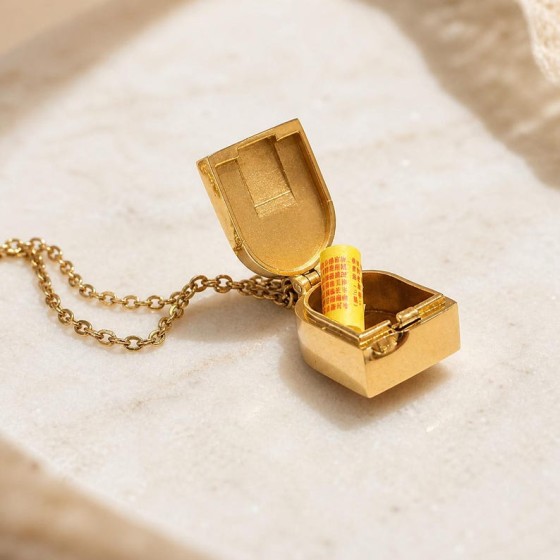
The following KyLin Aura prayer box necklace opens to reveal a small scroll detail. Its product page includes video, allowing you to view the hinge, compartment depth, and proportions before choosing.
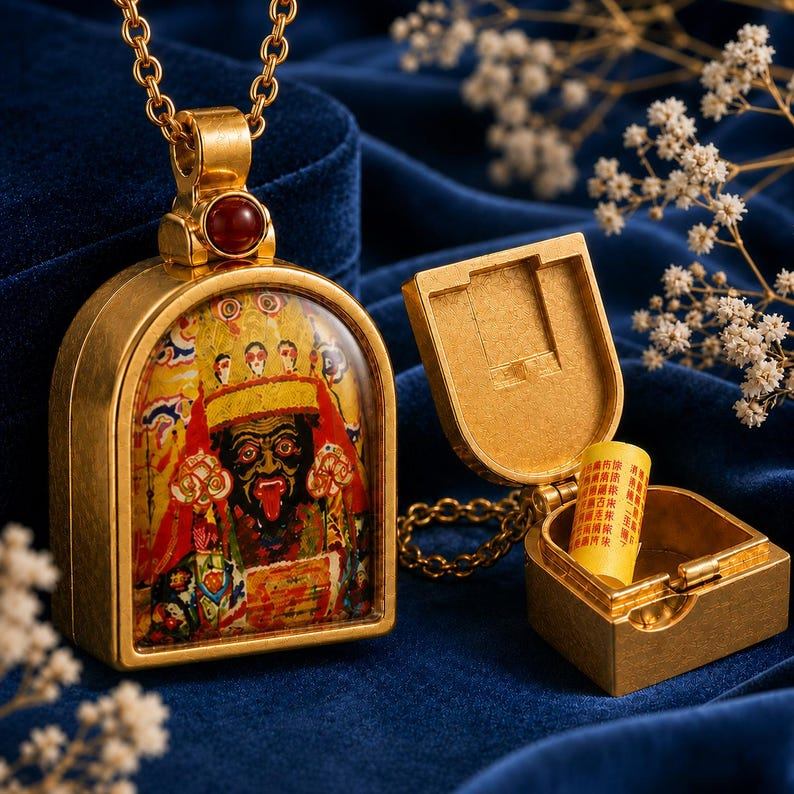
The KyLin Aura Zaki Lhamo Openable Prayer Box Necklace is a modern titanium-steel pendant with a small internal scroll detail. Its symbolism is intended as a personal reminder; it should not be confused with a guaranteed protective object or assumed to have formal consecration unless that is specifically documented.
How to Care for a Gawu or Prayer Locket
- Remove the necklace before showering, swimming, sleeping, sauna use, or intense exercise.
- Keep paper scrolls, painted surfaces, and internal compartments dry.
- Wipe the exterior gently with a soft dry cloth after wearing.
- Do not use abrasive polish on plating, enamel, painted images, or antique surfaces.
- Open and close the hinge gently; stop if it feels stuck or misaligned.
- Store the piece separately in a clean pouch or jewelry box.
Frequently Asked Questions
Is every Gawu box a religious object?
No. Some are devotional or consecrated objects, while others are modern jewelry inspired by the traditional form. Check provenance and the maker's description.
Are gau, Gawu, ghau, and ga'u the same thing?
They are common English transliterations for closely related Tibetan terms. Sellers, museums, and writers may prefer different spellings, so searching more than one form can help when researching an object.
What is an antique Tibetan gau box?
It is an older portable shrine or amulet case identified as Tibetan or Himalayan in origin. Age, origin, contents, and religious status should be verified through provenance or a qualified specialist rather than assumed from appearance or sales language.
Does every prayer box contain a mantra?
No. Some contain a scroll or image, some are sealed, and many modern lockets are empty or purely decorative.
Can a non-Buddhist wear a Gawu-style necklace?
Yes, when it is approached with cultural respect. Learn what the imagery represents, avoid false spiritual claims, and follow any handling guidance supplied with the piece.
Can I put essential oil or herbs inside?
Usually not. Liquid, damp, oily, or loose organic material may damage the scroll, metal, paint, adhesive, or closure. Use only materials the maker confirms are suitable.
How is a Gawu different from a Western photo locket?
Both can be small wearable containers, but a Gawu has a distinct Tibetan cultural and religious history. A photo locket usually centers on personal remembrance rather than portable shrine practice.
Explore related Tibetan Buddhist jewelry: Browse the KyLin Aura Tibetan Thangka Jewelry collection for symbolic Tibetan necklaces and pendants, or read the Buddhist pendant necklace guide.
Conclusion
A Tibetan Gawu box may hold a mantra, image, blessed material, relic, personal keepsake, or nothing at all. The responsible approach is to identify whether the piece is devotional, antique, inherited, or contemporary before opening or filling it. Understanding that context preserves both the object and the cultural meaning behind its small hidden chamber.