


Thangka: The True Spiritual Home of the Tibetan People<
When a painting is not only “seen” but also contemplated, it becomes more than art.
I have said many times that art is an act of planting the soul — a place where the heart can settle. And in Tibet, the art form most capable of sheltering the spirit is the thangka. Perhaps a thangka is the vessel of the Tibetan people’s inner world — step into that living vessel, and you may gradually leave the dust of the mundane behind and complete a long voyage of thought.
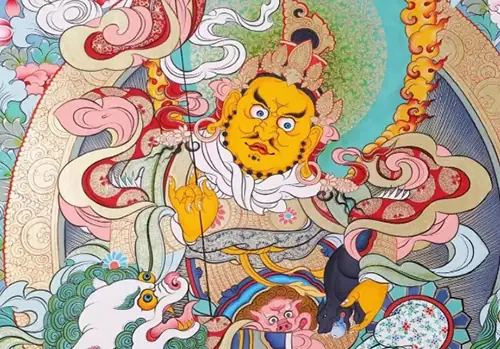
A Masterpiece of Tibetan Art
Thangka is a distinctive painting tradition in Tibetan culture. It carries a clear national character, a deep religious dimension, and a unique aesthetic style. Together with butter sculpture and appliqué embroidery, thangka is often counted among the Three Treasures of Tibetan Art. In the place closest to the sky, on the purest artistic plateau, thangka draws the world’s attention with its radiance, dignity, and boldness.
Today, many people fall in love with Tibet’s sacred mountains and holy lakes, admire the steadfast faith of Tibetan Buddhism, and seek the mystery of Tibetan art. Whether thangkas, murals, or Tibetan architecture, everything seems to hold a sense of the unknown. Admirers are many; true understanding is rare — and with thangka, an “encyclopedia” of Tibetan culture, those who really understand are rarer still.
Sacred Subjects and Craftsmanship
Thangkas commonly depict religious subjects: Shakyamuni Buddha and stories of his previous lives, bodhisattvas, Taras, and dharma protectors. Their sizes vary widely: many are around 70–80 cm; some are as small as a palm; and the largest can reach tens or even hundreds of meters.
Canvas: Repeated Polishing for a Perfect Surface
The canvas preparation is meticulous. A piece of white cotton is coated with a white ground, dried, then wetted and polished with a stone. After drying, it is polished again — repeated many times — until the surface becomes even and smooth.
Pigments: The Luster of Minerals and Plants
Thangka painting pays special attention to the use of color and its symbolism. Traditional pigments are made from precious natural minerals — gold, silver, pearl, agate, coral, turquoise, malachite, cinnabar — as well as plant-based dyes such as saffron, rhubarb, and indigo. These materials are ground into fine powder and mixed with hide glue and water.
The entire process is done by hand: complex, slow, and demanding. Because the pigments are pure, stable, and highly opaque, the finished surface appears rich and luminous. That is why thangkas can endure centuries of time and still retain their brilliant color.
The Lineage of Masters: Skill as a Form of Practice
In a sense, thangka itself is a living specimen of intangible cultural heritage — a record of preservation and transmission. The skill of the lineage holder determines the artistic achievement of a thangka.
The painter holds the world in the heart and sets time and experience onto the brush. One thangka may take months; others require years, even a decade or more. This work demands reverence and respect — without such feeling, one can only paint the “form” of thangka, never its spirit.
What distinguishes thangka from other painting traditions is that its content is already prescribed. The proportions and measurements of each sacred figure are strictly defined in the canonical iconometry text, the “Sutra of Measurements” (《度量经》). Facial expression, bodily proportion, and posture cannot be invented at will. And yet, the best works still move the viewer — they help people awaken insight, encourage goodness, and make the figure feel alive, revealing both dignity and compassion.
“Without reverence, you can paint the form of a thangka — but not its spirit.”
I remember a film from the 1970s about a serf named Qiangba, forced to paint murals in a monastery each day. The constant strain of brilliant pigments — especially gold powder — eventually blinded him. Painting thangkas is even more demanding on the eyes.
In a finely detailed thangka, some figures are smaller than a little finger, yet their expressions must still be complete; their gaze must be vivid; even the eyebrows can be counted hair by hair — that is true mastery. Painters hold the same posture for seven or eight hours a day, and often finish only a single flower or a single cloud in one day.
This is why thangka painting tests endurance and concentration. Many thangka painters are monks and lamas, people with uncluttered minds. In painting, they hold a sincere, devotional attitude and regard the work as merit.
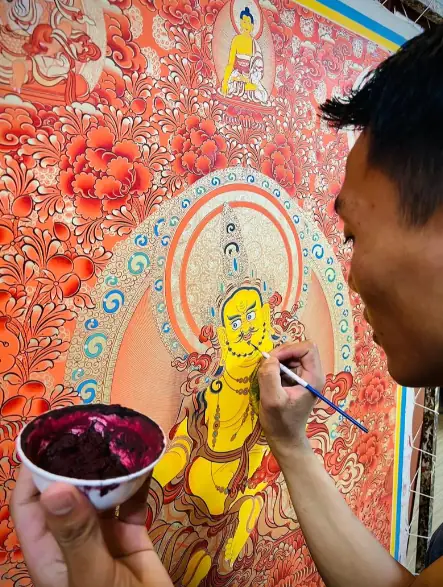
“Opening the Eyes”: The Soul Moment of a Thangka
To an outsider, different thangkas may look similar. But a truly good thangka carries a different “field” — a different presence. That presence depends on whether the faces and gestures are truly alive, and above all on the most critical step: opening the eyes.
The Buddha’s compassion and dignity are expressed through the brows and eyes. If the eyes are not painted well, the entire work is ruined. A great thangka has details that can shock the heart. The key is the painter’s skill — and the painter’s care. This is the soul of thangka, and it contains devotion and reverence.
Thangka in Monasteries: More Than Decoration
In Tibetan regions, every monastery — large or small — hangs thangkas in the main hall. Beyond solemnizing the space and shaping a sacred atmosphere, thangkas serve as supports for contemplation, helping monks and practitioners approach the deeper meaning of Buddhist teachings.
As an art of beauty and a symbol of auspiciousness, thangka is a profound union of Tibetan folk artistry and Buddhist culture. It is filled with religious force and artistic spirit, offering aesthetic enjoyment and spiritual fulfillment. Whether commissioned by a monastery or an individual, after completion the thangka must be consecrated according to ritual by a high lama through kaiguang (开光加持). Only then does it carry spiritual radiance and sacred potency — and only then can it bring auspiciousness.
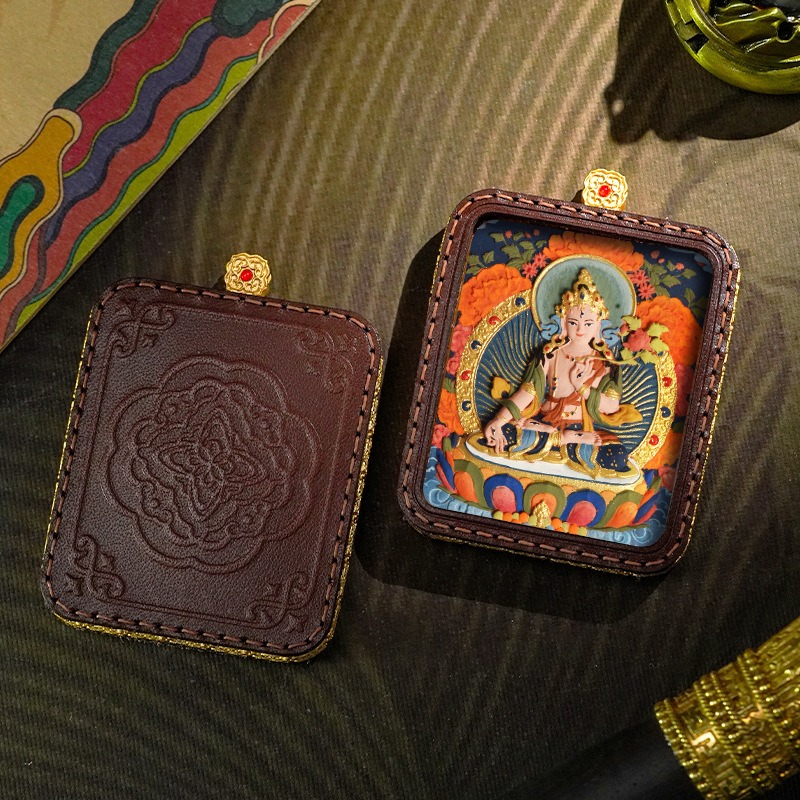
(KyLin Aura Tibetan Hand-Painted 3D Thangka Buddha Pendant Necklace)
Closing
If thangka is an art polished by time, then this uniquely Tibetan “heavy color on cloth” is a spiritual landscape painted by collective emotion. What it reveals — Tibetan Buddhist devotion — has long reflected the sacredness of religion and the excellence of art. In essence, it is an insight into the divine nature of life. And as we contemplate thangka, we also come to feel: thangka is the true spiritual home of the Tibetan people.
If you would like to wear a small piece of this art, explore our hand-painted thangka pendants and jewelry.